Source: BBC
US Measles Cases Reach 5,838, Highest Level Since 1991 as Country Loses Elimination Status.
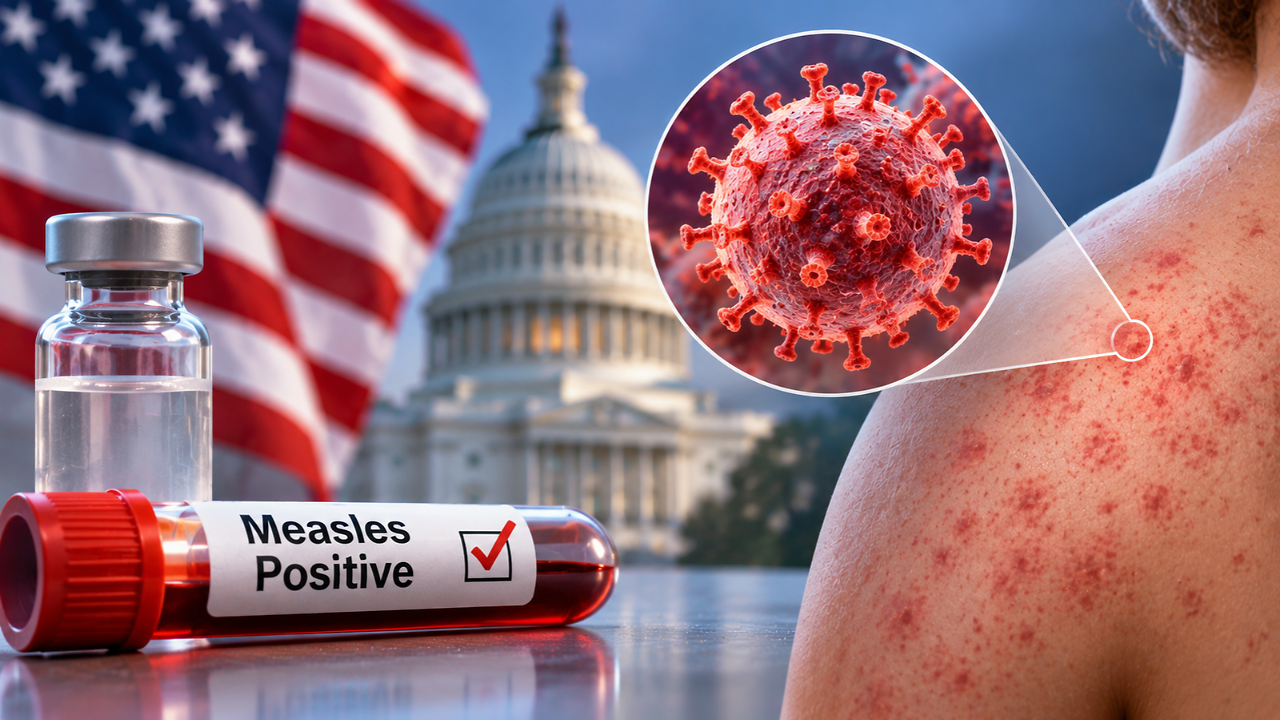
The United States has recorded 5,838 confirmed measles cases in 2026, its highest level since 1991, as sustained transmission of the highly contagious disease has forced the country to lose its measles elimination status. The resurgence represents a significant reversal of decades of public-health progress, with declining vaccination coverage and repeated outbreaks contributing to the spread across the country._
The United States has recorded 5,838 confirmed measles infections as of November 19, 2026, marking its highest number of cases in 35 years and raising fresh concerns about the country's ability to contain a disease it had successfully eliminated more than two decades ago.
The latest figures, published by the United States Centers for Disease Control and Prevention (CDC) on November 20, show that 5,820 cases were reported across 47 jurisdictions, while another 18 infections involved international visitors to the country.
The reported infections have resulted in 646 hospitalisations, representing approximately 11 per cent of confirmed cases. Six deaths have also been recorded, although the CDC notes that the figures remain subject to revision as additional information becomes available.
The scale of the outbreak is particularly significant because the United States officially achieved measles elimination in 2000 following years of extensive vaccination campaigns and public-health interventions.
Measles elimination does not mean that the disease has disappeared worldwide or that imported infections cannot occur. Rather, it means that continuous transmission within a country has been interrupted for at least 12 months.
However, sustained transmission lasting at least 12 months has now resulted in the United States losing that status in 2026, marking a major setback for its public-health system.
The CDC reported 43 new measles outbreaks during the year, with approximately 96 per cent of confirmed infections associated with outbreak clusters. The figure includes cases linked to outbreaks that began in both 2025 and 2026.
The resurgence has been closely associated with gaps in vaccination coverage. According to the CDC, approximately 96 per cent of confirmed cases involved people who were either unvaccinated or whose vaccination status was unknown.
Measles is among the most contagious infectious diseases, spreading through the air when an infected person coughs or sneezes. The virus can remain infectious in the air for up to two hours after an infected person has left an enclosed space.
Initial symptoms commonly include high fever, cough, runny nose and red, watery eyes, followed by a characteristic skin rash. Although many patients recover, the infection can cause severe complications, including pneumonia, brain inflammation and death, particularly among young children and people with weakened immune systems.
Health authorities have continued to recommend two doses of the measles, mumps and rubella vaccine as the most effective protection against infection. The CDC estimates that two doses are approximately 97 per cent effective against measles.
However, national vaccination coverage among American kindergarten pupils has fallen below the 95 per cent level generally considered necessary to maintain strong community protection. In communities where vaccination rates are particularly low, the virus can spread rapidly once introduced.
The United States recorded 2,289 confirmed measles cases in 2025, compared with 285 in 2024. The 5,838 cases recorded so far in 2026 therefore represent a substantial increase, even before the end of the year.
The development also has wider implications for public health across the Americas. The Pan American Health Organization has identified the loss of measles elimination status in the United States, Mexico and Bolivia following the re-establishment of sustained transmission in the three countries.
The resurgence demonstrates the continuing importance of routine immunisation, particularly as international travel increases opportunities for infectious diseases to cross borders. An outbreak in one country can become a wider regional concern when infected travellers enter communities with insufficient vaccination coverage.
For American health authorities, containing the current outbreaks will require renewed vaccination efforts, effective disease surveillance and improved access to immunisation, particularly in communities where coverage has fallen.
The loss of elimination status does not mean that the measles vaccine has become ineffective or that the disease cannot be brought under control. It does, however, expose the consequences of allowing vaccination gaps to widen after years of progress.
A disease once brought under control through sustained public-health intervention is now spreading continuously again, demonstrating how quickly decades of progress can be undermined when preventive measures weaken.

 Noble Nigeria

© Noble Nigeria. All Rights Reserved || Privacy Policy and User Agreement