Source: BBC
Nvidia Halts Approved AI Chip Shipments as Technology Rivalry Deepens
Nvidia has suspended shipments of its licensed Hopper-generation artificial intelligence processors to China, reversing a major commercial opening created by Washington's decision to relax restrictions on selected advanced chips. The announcement raises fresh uncertainty over the future of the company's Chinese market, as Washington tightens scrutiny of technology transfers and Beijing restricts imports while accelerating efforts to develop domestic alternatives._
The suspension was disclosed by Nvidia's interim chief executive, Colette Kress, during the company's latest earnings call on November 18. Kress said the company's financial outlook no longer included licensed Hopper data-centre products for China and confirmed that Nvidia was no longer shipping the approved processors to Chinese customers.
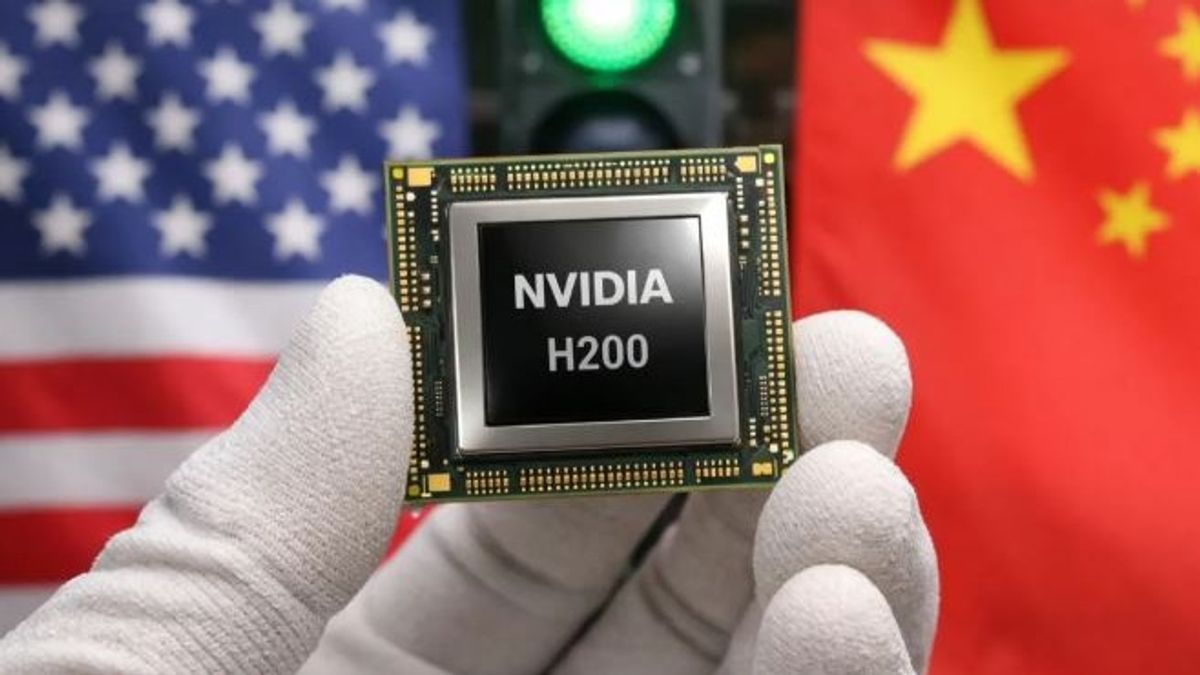
The Hopper family includes the H200, one of Nvidia's powerful artificial intelligence processors designed to handle the enormous computing demands involved in training and operating advanced AI models.
The announcement is significant because the United States had previously approved applications for selected Chinese companies to purchase the H200 following a policy adjustment by President Donald Trump's administration. The approval, introduced in January 2026, allowed exports to proceed on a case-by-case basis, subject to security conditions.
The decision represented a partial relaxation of restrictions introduced in 2022, when Washington began limiting China's access to advanced American semiconductor technology over concerns that the processors could strengthen Chinese military capabilities.
The Trump administration subsequently permitted sales to 10 Chinese companies, including Alibaba, Tencent and ByteDance, the parent company of TikTok. However, the approval did not guarantee that the chips would reach their intended customers, as Beijing maintained its own restrictions on large-scale imports.
The consequences of those restrictions became increasingly visible in November when Reuters reported that approximately 600,000 H200 processors were being held in Hong Kong while awaiting Chinese approval for large-volume shipments into mainland China. Although some Chinese companies had obtained limited quantities, the authorities had not authorised the broader imports Nvidia and its customers had anticipated.
Nvidia's latest announcement therefore exposes a difficult commercial situation in which American export licences, Chinese import restrictions and the company's own shipping decisions have combined to disrupt a potentially lucrative market.
The financial implications are substantial. Nvidia reported that sales of licensed Hopper products to China reached approximately $2.4 billion in the quarter ending October 25. However, the company excluded further licensed Hopper shipments from its financial guidance, leaving investors uncertain about how much of the Chinese market it can realistically recover.
The development is also unfolding amid growing scrutiny of Nvidia's export-control compliance. US Treasury Secretary Scott Bessent said on November 22 that the department was still awaiting responses from Nvidia concerning whether restricted artificial intelligence chips had reached China through intermediaries or weaknesses in export-control procedures. He said the administration had given the company until November 25 to provide answers.
Bessent has also argued that Chinese demand for the H200 remains limited, suggesting that Beijing's efforts to build its domestic semiconductor industry could reduce its dependence on American processors. He has maintained that the United States has not announced a further change to its existing H200 export policy.
The scrutiny comes as Washington and Beijing continue competing for control of the technology underpinning the global artificial intelligence industry. Advanced processors are essential to training increasingly sophisticated AI systems, and access to them has become an important component of national economic and military competitiveness.
China has responded to American restrictions by investing heavily in domestic semiconductor production. Companies such as Huawei are developing alternative processors, while Chinese technology firms are expanding their efforts to build AI systems around locally produced hardware. However, Nvidia's chips retain significant advantages in computing performance and software compatibility, making a complete transition difficult for many Chinese developers.
The dispute also extends beyond the immediate question of physical chip shipments. US authorities are examining the possibility that Chinese companies could access American computing capacity through data centres located in third countries, potentially allowing them to obtain the benefits of restricted processors without importing the hardware directly into China.
This raises further complications for international technology companies operating across markets with competing regulatory requirements. Businesses providing cloud computing, data-centre infrastructure and advanced semiconductor services could face greater scrutiny over their customers, ownership structures and the geographical location of computing operations.
For Nvidia, the immediate challenge is protecting its commercial position in China while maintaining compliance with American national-security requirements. For Beijing, the restrictions reinforce the urgency of developing a semiconductor industry capable of meeting the country's growing artificial intelligence needs without depending on foreign suppliers.
The consequences extend beyond the two countries. The United States and China occupy central positions in the global technology supply chain, while semiconductor manufacturing depends on specialised companies and production facilities across several economies, particularly in Taiwan, South Korea and Japan.
For countries such as Nigeria, which are seeking to expand digital infrastructure, artificial intelligence adoption and technology-driven economic development, the dispute illustrates the importance of access to advanced computing resources. The cost and availability of processors, data-centre capacity and cloud services are increasingly influenced by geopolitical decisions made far beyond individual markets.
The suspension does not amount to a new blanket American ban on every Nvidia product sold to China, nor does it establish that all previously approved chips have been permanently barred from delivery. It does, however, demonstrate how quickly commercial access to critical technology can become uncertain when national-security concerns, export regulations and competing industrial ambitions converge.
As Washington awaits Nvidia's response to its compliance questions and Beijing continues to promote domestic alternatives, the future of the company's Chinese business remains uncertain. What is increasingly clear is that access to artificial intelligence technology is no longer determined by commercial demand alone; it is becoming an important instrument of economic and geopolitical power.

 Noble Nigeria

© Noble Nigeria. All Rights Reserved || Privacy Policy and User Agreement