Source: BBC
Shareholders Sue Jensen Huang Over Alleged Chinese Intelligence Links as Board Opens Investigation
Investors accuse the world's leading AI chipmaker and its chief executive of withholding information about Huang's reported relationship with a former technology executive suspected by US authorities of working for Chinese intelligence, raising questions about corporate disclosure, national security and the protection of America's most valuable semiconductor technology._
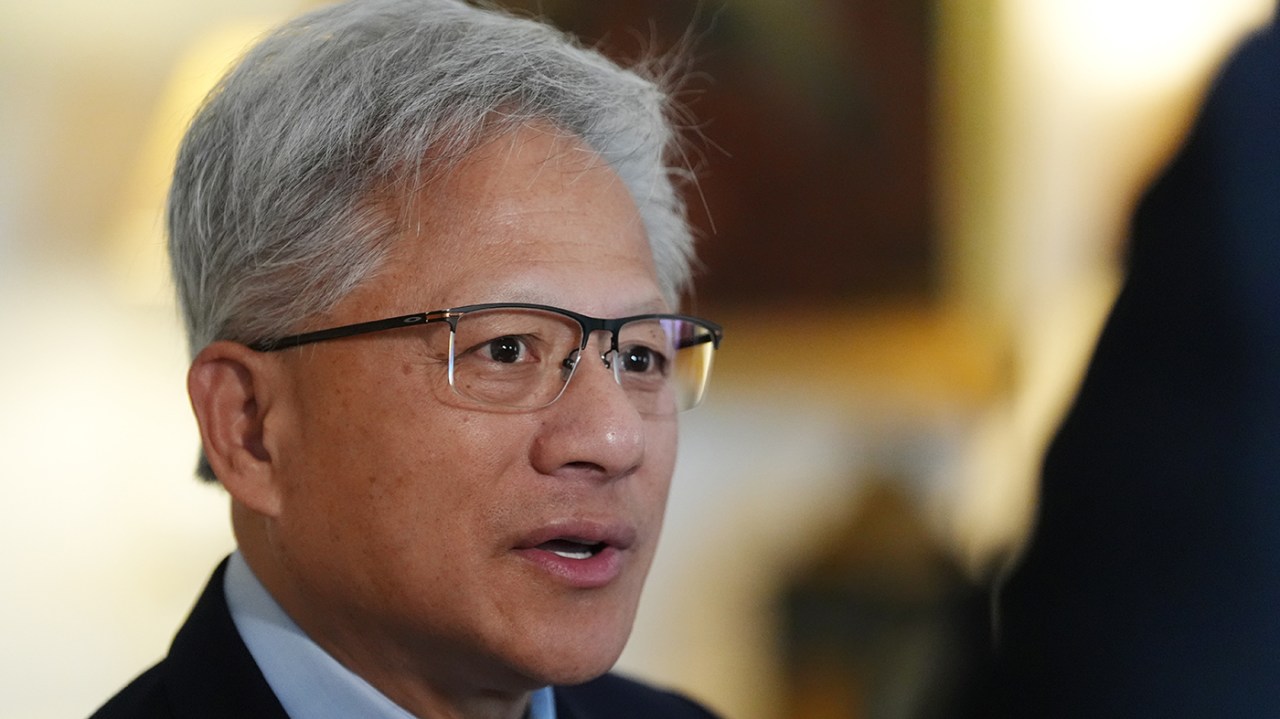
Nvidia, the world's most valuable semiconductor company, is facing a proposed shareholder class-action lawsuit over allegations that its chief executive, Jensen Huang, concealed information about his reported relationship with a woman suspected of having links to Chinese intelligence.
The lawsuit, filed on Monday, November 9, in a federal court in San Jose, California, accuses Nvidia and Huang of misleading investors by failing to disclose information that could have exposed the company to national security concerns, reputational damage and commercial risks.
At the centre of the dispute is Alice Huang, a former executive of Singapore-based technology company Megaspeed, whom US authorities reportedly identified as a Chinese intelligence asset. She is not related to Jensen Huang.
The complaint alleges that the chief executive's reported intimate relationship with Alice Huang created potential vulnerabilities for a company whose products have become central to America's technological and economic competition with China. Investors argue that the alleged circumstances and their implications should have been disclosed to shareholders.
The lawsuit, led by investor Mark Kistenmacher, seeks unspecified damages. It however, does not establish that Nvidia's technology was compromised, that Huang knowingly assisted a foreign intelligence operation or that the allegations against Alice Huang have been proven.
The legal action follows a report by The New York Times last month that US intelligence agencies had concluded Alice Huang was gathering information for Beijing. The reported intelligence assessment raised questions about how she developed access to one of the most influential executives in the global technology industry.
Jensen Huang had reportedly acknowledged to Nvidia employees that he had been unfaithful to his wife but did not disclose details of the alleged relationship while Nvidia did not immediately respond to requests for comment on the shareholder lawsuit.
The company's board had already announced an independent investigation into the matter on Sunday, November 8, a day before the shareholder lawsuit was filed.
In a statement, Nvidia said a committee of independent directors, supported by external legal advisers, would oversee the investigation into reports that its founder and chief executive had been the target of a foreign intelligence operation.
The board said it had no reason to believe that either American national security or Nvidia's trade secrets had been compromised. However, it said the investigation would examine all available information.
Huang has committed to cooperating with the review, while the board expressed confidence in his leadership.
The investigation places an unusual degree of scrutiny on the personal and professional relationships of an executive whose influence extends beyond the company he leads. Huang co-founded Nvidia in 1993 and has overseen its transformation from a graphics-processing company into the dominant supplier of advanced chips used to train and operate artificial intelligence systems.
Nvidia's processors are now essential to the infrastructure supporting some of the world's largest AI models, data centres and cloud-computing operations. Their strategic importance has made the company a central player in Washington's efforts to restrict China's access to advanced American semiconductor technology.
That geopolitical dimension is particularly important to the allegations involving Alice Huang.
She previously worked at Megaspeed, a Singapore-based technology company that has attracted US scrutiny over concerns about the movement of advanced Nvidia chips through Southeast Asian businesses to Chinese customers.
American export restrictions prohibit or limit the sale of certain advanced computing chips to China because of concerns about their potential military and strategic applications. Singapore and Malaysia, however, remain important technology and data-centre markets, making the movement and final destination of high-performance processors a sensitive issue for US regulators.
The allegations involving Alice Huang therefore extend beyond a reported personal relationship. They have raised questions about whether foreign intelligence could exploit commercial relationships and executive access to gather information about a company operating at the centre of a major national security contest.
There is, however, an important distinction between the reported intelligence assessment, the allegations against Alice Huang and the shareholder lawsuit against Nvidia. None of these, by themselves, establishes that the company knowingly transferred restricted technology to China or that its internal information was obtained by a foreign government.
The controversy has already attracted attention in Washington.
US President Donald Trump said on Monday that the FBI was looking into the matter. Speaking about Huang, Trump said he had spoken with the Nvidia chief executive and that Huang had told him he had no idea the woman in question was allegedly a spy.
Trump also expressed confidence in Huang, describing him positively and suggesting that the chief executive should not have reason to worry.
The comments indicate that the controversy has moved beyond corporate governance into a broader national security discussion involving the American government.
China, meanwhile, has rejected the underlying espionage allegations. Its Foreign Ministry previously described the reports as groundless speculation intended to smear the country.
The financial consequences have also begun to emerge. Nvidia shares fell 4.3 per cent on Monday, wiping approximately $190 billion from the company's market capitalisation.
The lawsuit was filed approximately five minutes after the US stock market closed, following the decline in the company's share price. While shareholder litigation frequently follows substantial market losses, the legal action introduces another layer of uncertainty for investors already concerned about the controversy.
For Nvidia, the immediate challenge is to reassure shareholders, regulators and government officials that its leadership arrangements and internal security procedures remain reliable.
The case also presents a difficult question for the American technology industry: how should companies protect sensitive commercial information when their executives routinely engage with international customers, investors, business partners and government officials?
As competition over artificial intelligence intensifies, the security of advanced semiconductor technology has become an increasingly important component of American economic and foreign policy. Nvidia's position gives the company considerable commercial influence, but also makes its leadership and corporate relationships matters of national interest.
The investigation will determine whether the reported relationship created any actual security exposure and whether the company failed in its responsibility to disclose material information to investors. Until those findings emerge, the allegations remain unresolved.
For now, a dispute that began with reports of a suspected foreign intelligence operation surrounding one of America's most powerful technology executives has developed into a shareholder lawsuit with implications for corporate accountability, artificial intelligence security and the wider US–China technology rivalry.

 Noble Nigeria

© Noble Nigeria. All Rights Reserved || Privacy Policy and User Agreement