Source: BBC
Google Releases Gemini 4 Carbon to Developers as AI Race Moves Towards Autonomous Digital Workers
Google has released Gemini 4 Carbon, its latest advanced artificial intelligence model, to developers, businesses and selected consumers, expanding the company's push towards AI systems capable of executing complex software, research and cybersecurity tasks through extended reasoning and coordinated teams of automated agents._
Announced by Google DeepMind on November 10, Carbon is designed for assignments that require several stages of planning, execution and verification. Unlike conventional chatbot interactions, where a system responds to individual instructions, the model is intended to work through complicated problems, examine its output and make corrections before completing a task.
Google says Carbon is particularly suited to complex software engineering, full-stack application development, scientific research and cybersecurity. It describes the model as its strongest offering for long-running agentic workflows, where AI systems can independently carry out connected tasks towards a specific objective.
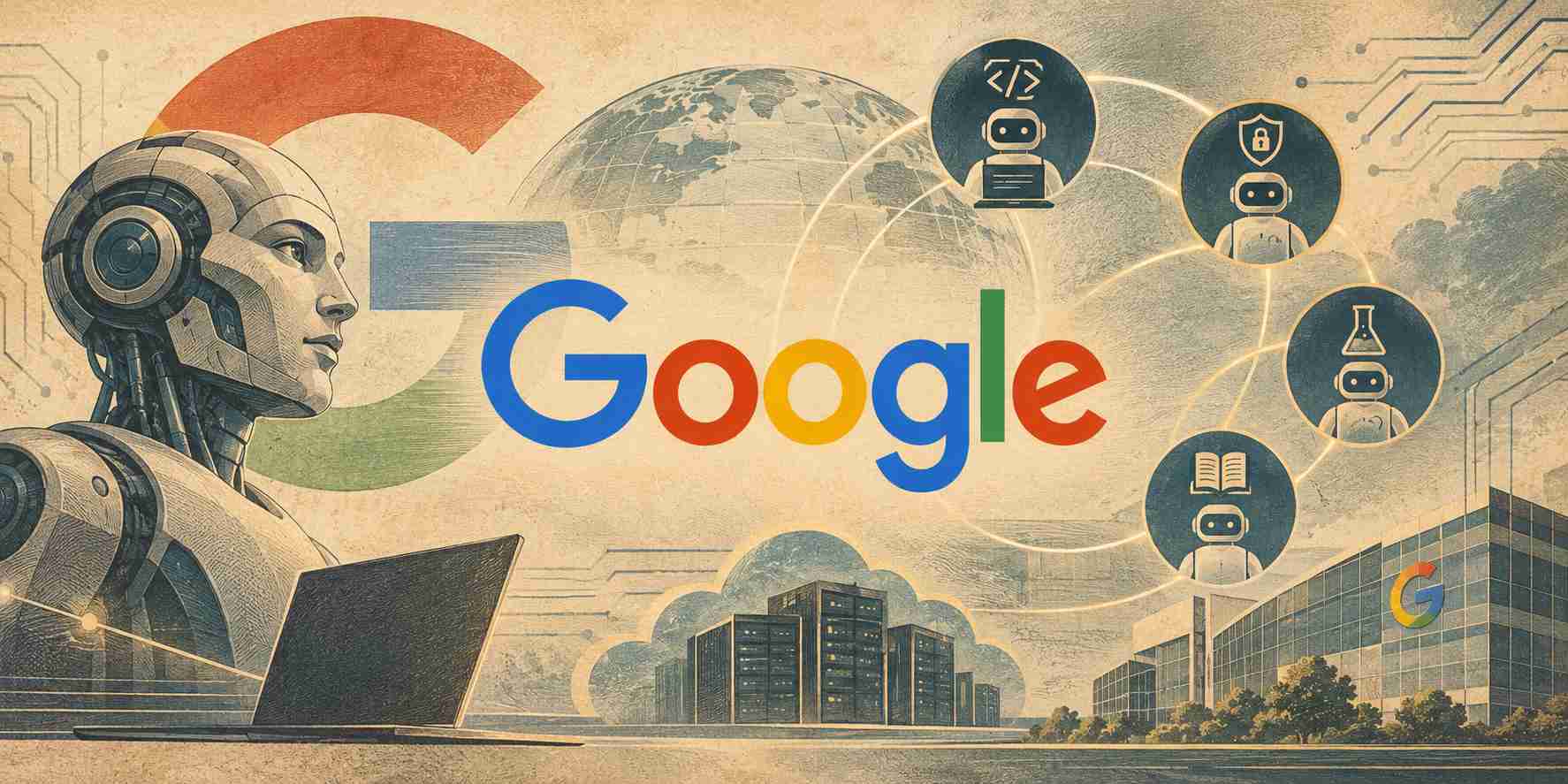
One of the most significant additions accompanying the release is a new feature called `/swarm`, introduced in preview on Google's Antigravity development platform.
The feature allows developers to issue a single instruction and deploy a coordinated team of AI agents to work on different aspects of a project. One agent can handle architectural planning, another can write software components, while others examine the code, identify errors and verify the completed work.
The system is designed to allow developers to monitor the agents' activities in real time, rather than manually assigning every stage of a project. Google says its Carbon model can be allocated to tasks requiring deeper reasoning, while smaller and faster models handle other activities across parallel workspaces.
The development reflects a broader change in the artificial intelligence industry, where companies are increasingly competing to build systems that can perform professional assignments rather than simply generate convincing responses.
Google is also positioning Carbon as a tool for cybersecurity defence. The model has been designed to inspect software, identify vulnerabilities, examine how security weaknesses could be connected and assist engineers in developing fixes.
Before the wider release, Google made a specialised version available to selected cybersecurity defenders through its Fairwind programme. The company says Carbon demonstrated improved performance in identifying and validating software vulnerabilities and producing patches.
However, the same capabilities raise concerns about the potential misuse of advanced AI in cyberattacks. A system capable of identifying weaknesses in software and understanding how they can be exploited could become a valuable tool for both security professionals and malicious actors.
Google says it has strengthened the model's safety systems to prevent its advanced reasoning capabilities from being used to facilitate cyberattacks. The company also reports improvements in resistance to prompt-injection attacks, although it acknowledges that this remains an area requiring continued testing.
Access to Gemini 4 Carbon is being expanded through Google's developer and enterprise platforms. Paying developers can use it through the Gemini API in Google AI Studio and Android Studio, while businesses can access it through Gemini for business. Google AI Ultra subscribers are also receiving access through the Gemini app, Antigravity and AI Mode in Search.
The company has introduced an initial API price of $2 per million input tokens and $10 per million output tokens. These rates are scheduled to increase to $4 and $20 respectively after November 30, 2026. The introductory pricing makes the model available at a lower initial cost, although actual expenses will depend on the volume and complexity of tasks performed.
Google also says Carbon has achieved leading positions in several independent benchmarks, including CursorBench 4.0, Perplexity's WANDR and Zapier's AutomationBench. These results are presented by Google as evidence of its performance in practical AI applications, although benchmark results do not necessarily establish superiority across every type of task.
For the technology industry, the release intensifies competition over the development of AI agents capable of carrying out extended assignments with limited human supervision. It also raises questions about how businesses will reorganise work as automated systems become increasingly capable of performing tasks previously handled by specialised teams.
For Nigeria, the implications extend to software development, technology entrepreneurship and digital services. More capable AI development tools could allow smaller teams and independent programmers to build applications, automate business processes and undertake projects that previously required larger engineering resources.
However, access to these capabilities will depend on computing infrastructure, reliable internet, foreign-currency subscriptions and the technical capacity to supervise AI-generated work. The growing ability of AI to undertake complex professional tasks also presents challenges for employment, cybersecurity and the development of local technological expertise.
With Gemini 4 Carbon, Google is advancing a model of artificial intelligence in which the objective is no longer simply to answer a user's question, but to take responsibility for completing increasingly complicated work.

 Noble Nigeria

© Noble Nigeria. All Rights Reserved || Privacy Policy and User Agreement